
Wet Weather Wedding Planning — What Every Australian Couple Needs to Know Before They Book a Venue
By The Honey Lane Way · Wedding Planning · 14 years of experience
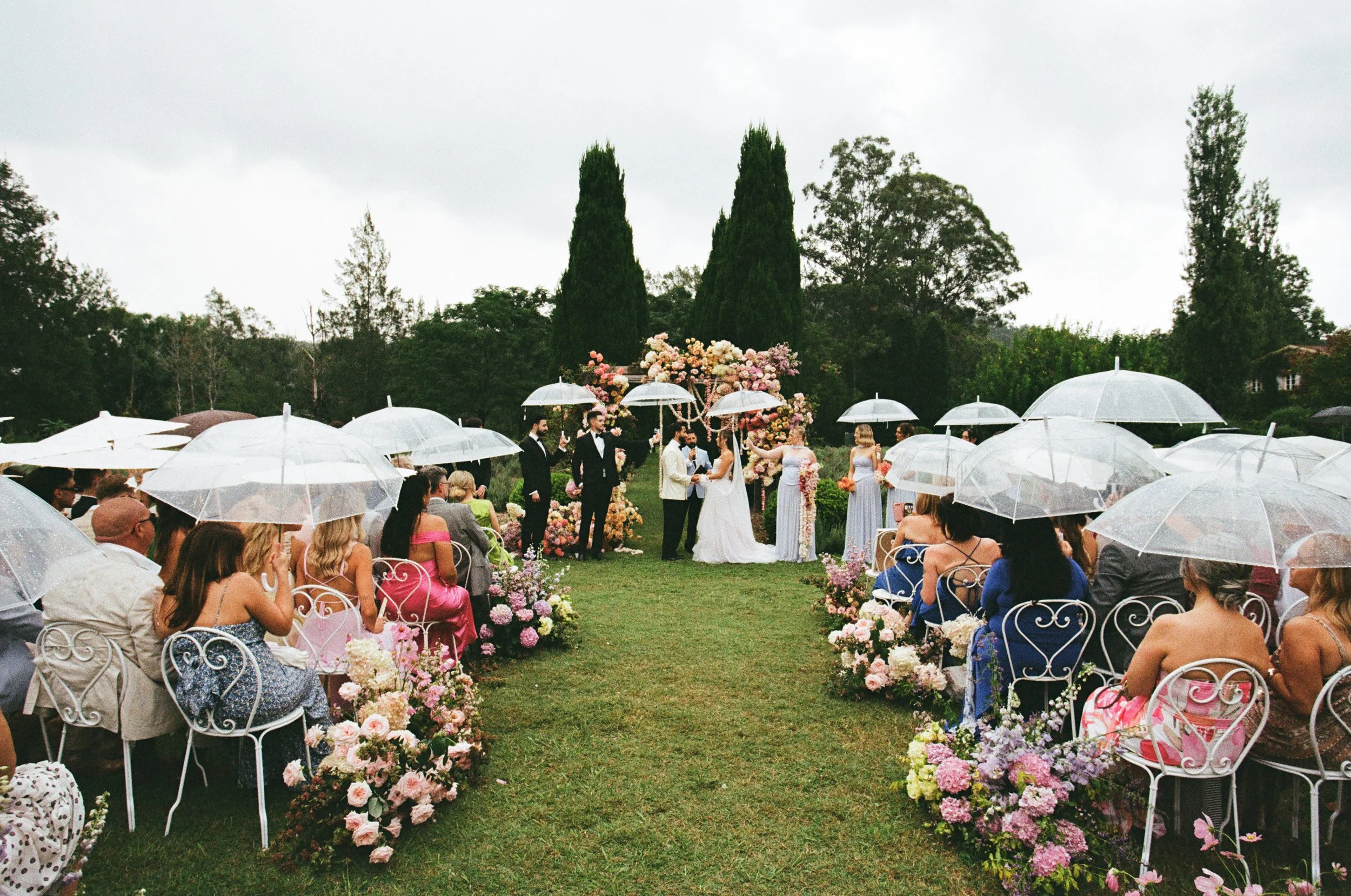
Nobody pictures rain on their wedding day. And honestly, why should you?
Your wedding day vision is probably full of golden light, bare shoulders and guests wandering freely through the most gorgeous setting — not umbrellas and contingency marquees. But after 14 years of planning weddings across Australia and overseas, there is one thing I know for certain: the couples who spend a little time thinking about adverse weather ahead of time are the calmest, most present couples on the day itself.
And the couples who don't? They're the ones refreshing the weather app at 3am the week before the wedding.
The weather is the one thing we simply cannot control on a wedding day. What we can control is how we plan for it.
This is your complete guide to wet weather wedding planning — what to ask, what it actually costs, and how to reach your wedding day feeling calm and prepared for whatever the sky decides to do.
It's Not Just Rain — Think Adverse Weather
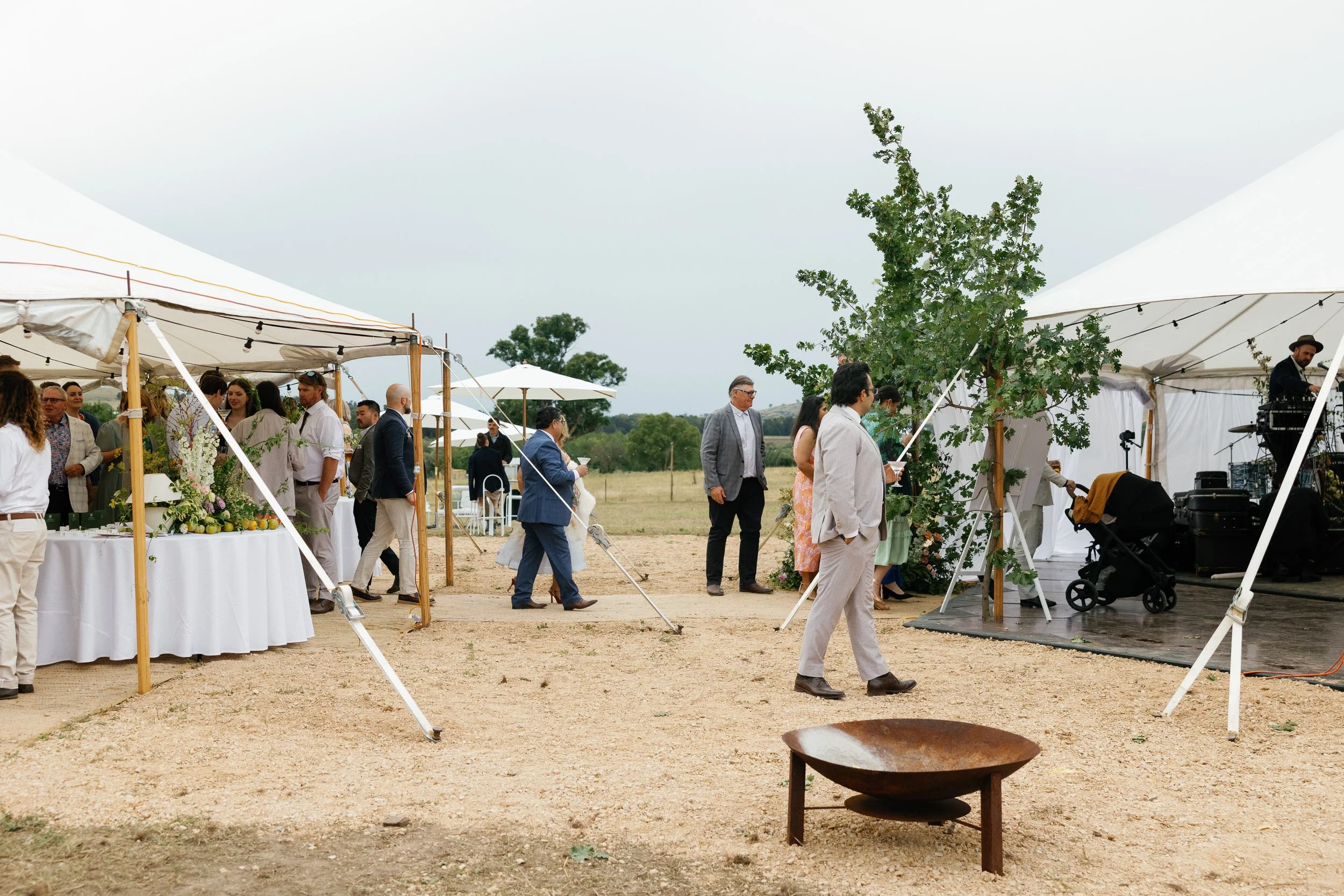
When most couples hear 'wet weather planning' they immediately picture pouring rain. But adverse weather in Australia is so much broader than that — and your planning needs to reflect that.
Depending on where and when you're getting married, you might need to consider:
Heavy rain or storms
Strong wind — particularly for outdoor ceremonies with light structures, florals, or candles
Extreme heat — especially for summer or inland weddings where temperatures can climb well above 35°C
Unseasonal cold — a late autumn wedding can surprise you with temperatures that feel nothing like you planned for
All of these require different responses. A plan for wind is not the same as a plan for heat. So when you're thinking about your venue's options, think beyond umbrellas.
2. What to Ask Your Venue Before You Sign Anything
This is where so many couples get caught out — they fall in love with a venue, sign the contract, and only then start asking the hard questions about what happens if the weather turns.
Before you commit to any venue, you need to understand its adverse weather options completely. Not just 'there's a backup inside' — but specifically:
What does the backup space look like, and have you seen it?
How many guests does it hold comfortably — is it the same capacity as the outdoor space?
How long does the transition take if you need to move from outdoor to indoor?
Who makes the call, and when? (This is important — you want clarity on the decision timeline so you're not scrambling on the morning of your wedding)
What does the venue look like and how does it function in extreme heat? Is there adequate shade, airflow, or air conditioning?
Are there any restrictions on what you can bring in as your own wet weather solutions — such as a marquee or umbrella hire?
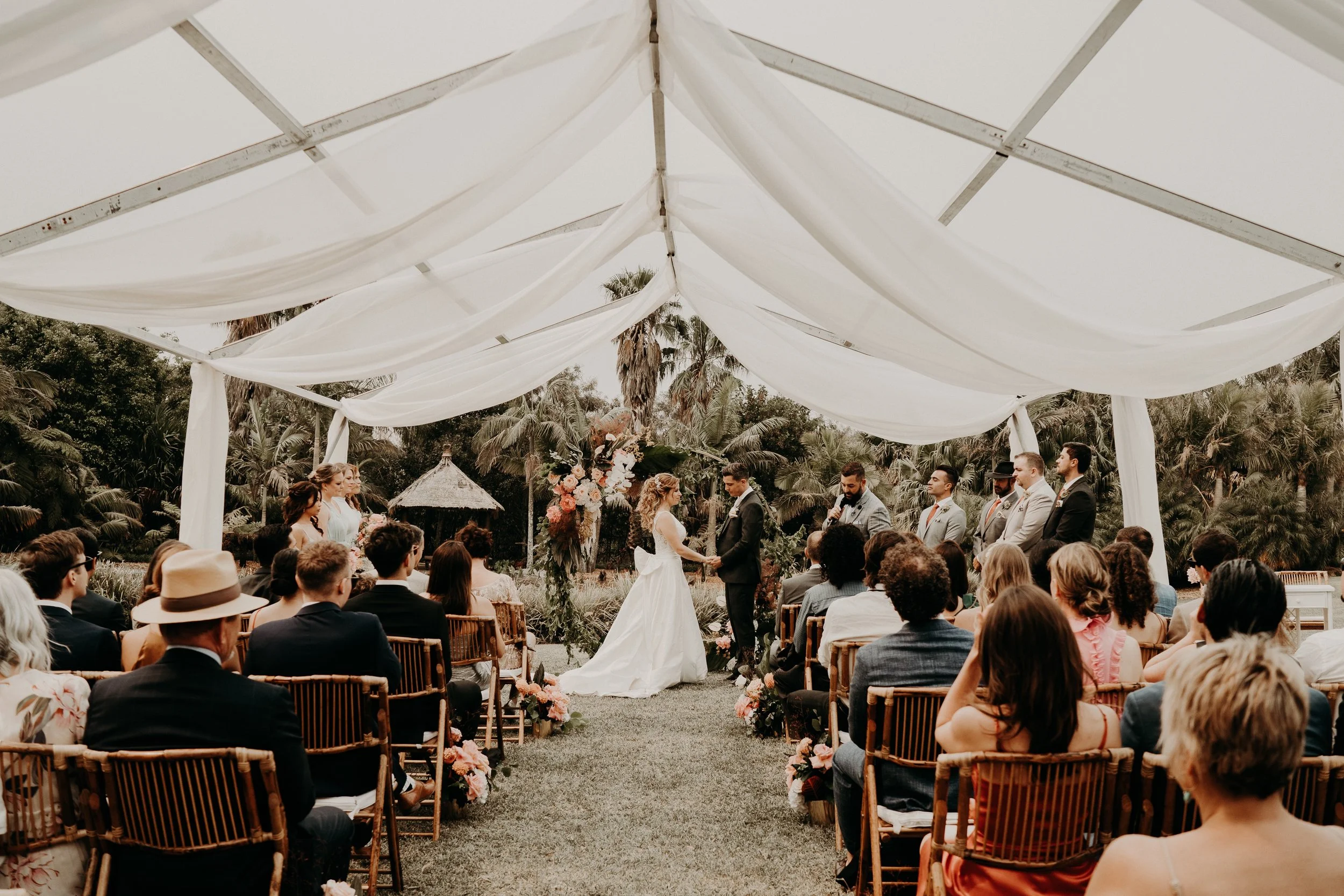
“If a venue can't answer these questions clearly, then you might need to reconsider if it’s the best choice for you.”
Ask to see the backup space. Walk through it. Stand in it and imagine your guests there. Because if the weather turns on the day, that is the room your wedding is happening in — and you want to feel good about it.
3. The Real Costs — Budget for This Early
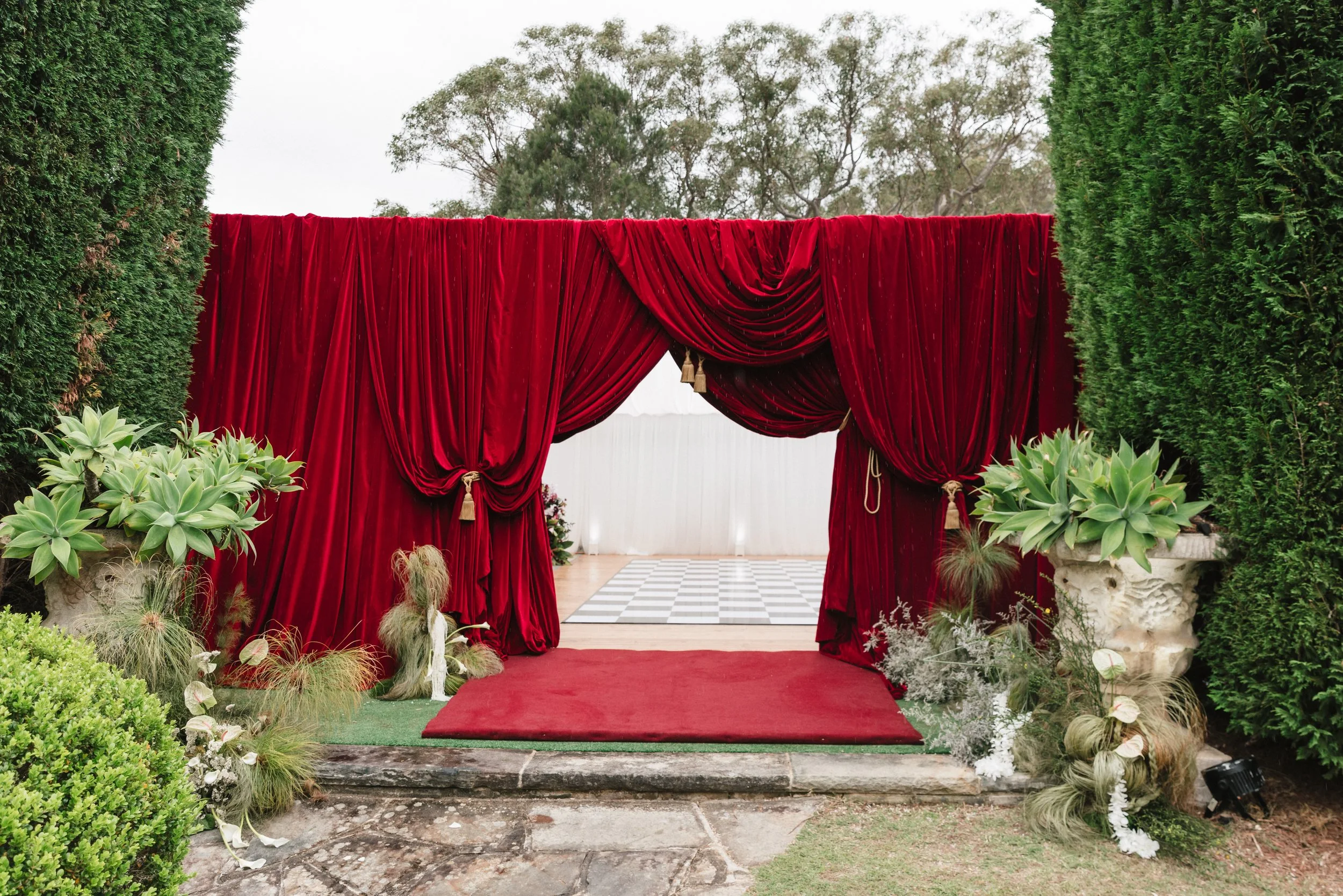
One of the most common mistakes I see is couples treating wet weather planning as an afterthought — something to sort out closer to the date. The problem is that by then, the budget is set and the costs come as an unpleasant surprise.
Wet weather contingency is a budget line item, not a last-minute panic buy. Here are some of the costs worth factoring in early:
Clear umbrellas — typically around $15–$25 each. For 100 guests that's $1,500–$2,500 before you've done anything else.
Marquee hire — if your venue allows or requires an external marquee as backup, you will usually need to pay a deposit to hold the booking whether you use it or not. These deposits are often non-refundable.
Parasols for heat — if you're marrying in summer and your ceremony is exposed, parasols for guests are a lovely touch that can also be a genuine necessity.
Portable fans or misting units — for outdoor summer receptions, these can make the difference between guests enjoying themselves and quietly wilting.
Heaters — for open-sided marquees or evening events in cooler months, patio heaters are often a non-negotiable.
Blankets — a beautiful basket of wraps for a cool evening ceremony costs relatively little but guests remember it.
None of these are enormous on their own. But added together and left unplanned, they can add several thousand dollars to your final tally in the last weeks before the wedding — which is the most financially pressured time of the whole process.
Build the contingency into your budget at the beginning, and you'll never feel the pinch.
4. Know Your Own Threshold
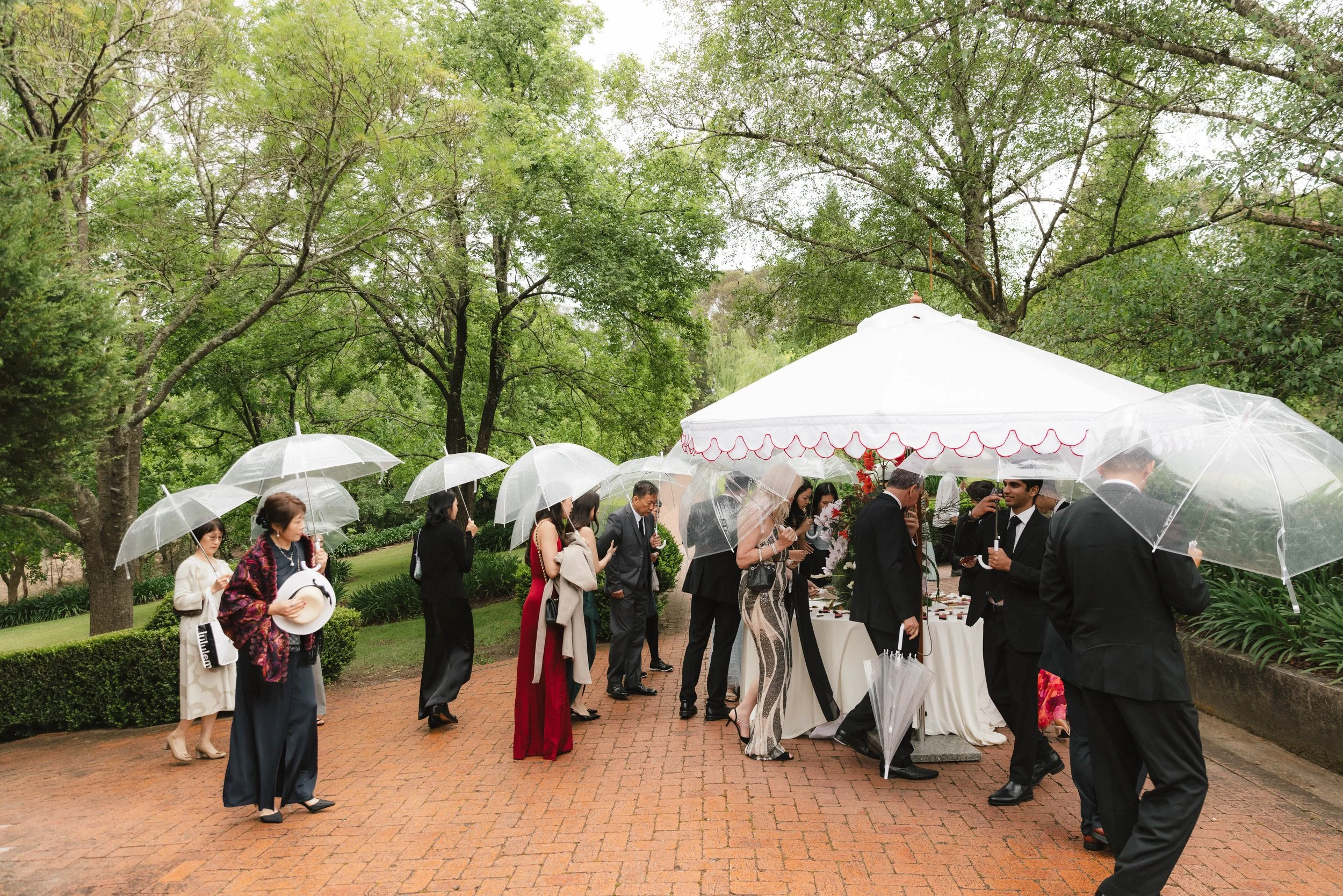
This might sound like an unusual thing to plan for — but in my experience, it matters enormously.
Every couple has a different relationship with the idea of weather at their wedding. Some genuinely love the idea of a light shower during the ceremony — it's romantic, it's memorable, it makes for incredible photographs. Others feel strongly that they want no chance of rain anywhere near their vows, and that is equally valid.
The key is knowing which camp you fall into before you start planning — because it shapes everything from the venue you choose to the backup plans you put in place.
If you're happy with a light sprinkle: your planning focus is on having umbrellas available, protecting key moments like the first look and portraits, and making sure your florals and stationery are handled accordingly.
If you want absolute coverage: your venue choice needs to prioritise a beautiful indoor or covered option that you would genuinely love just as much as the outdoor space. Don't compromise on this.
Have this conversation with your partner early in the planning process. It will make every venue decision that follows much cleaner.
5. Have a Clear Plan — and Revisit It as the Date Approaches
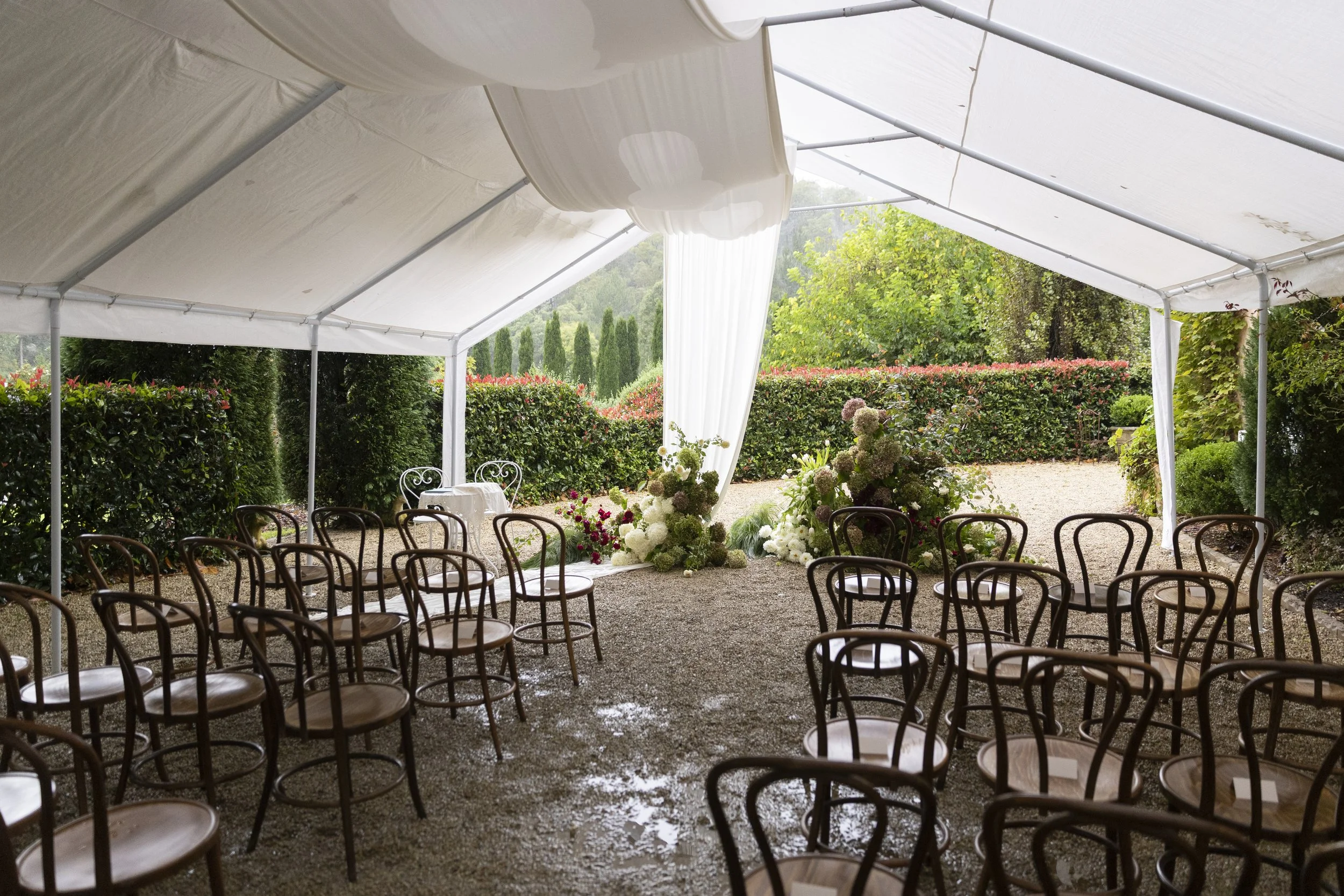
Once you've chosen your venue and understood your options, document your adverse weather plan clearly. This doesn't need to be complicated — a simple one-page summary that covers:
What the trigger is for activating the backup plan (temperature, rainfall, wind speed — whatever is relevant to your venue and preferences)
Who is responsible for making the call — ideally your planner or venue coordinator, not you
The timeline for the transition if one is needed
What has been pre-booked or pre-paid as part of the contingency
A contact list for any external suppliers (umbrella hire, marquee company, etc.)
Then, as you get closer to the wedding, revisit the plan. Confirm the deposits. Check that the marquee booking is still locked in if you need it. Make sure your coordinator has the same information you do.
The goal is to reach the week of your wedding knowing that whatever happens, there is a plan in place and someone other than you is holding it.
6. The Forecast Rule — Don't Check Until Seven Days Out
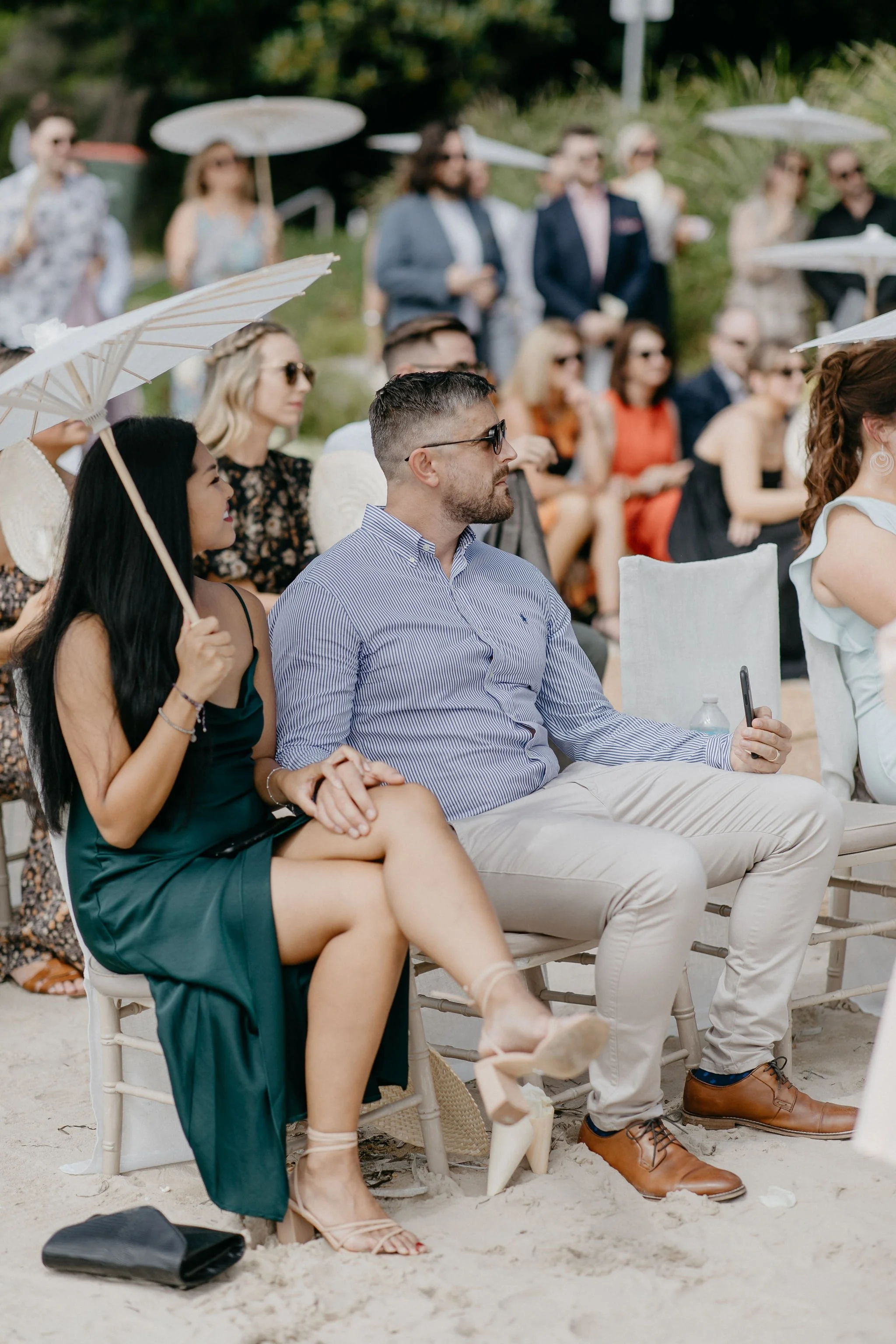
This is probably my most practical piece of advice, and the one couples find hardest to follow.
Please don't start checking the weather forecast months out from your wedding. Or even weeks out. The science simply doesn't support it — meteorological forecasts beyond about seven days are not reliable enough to act on, and checking early will only give you anxiety without giving you information.
The moment you start refreshing the app three months before your wedding, you are putting yourself through unnecessary stress. The forecast will change a dozen times before the day arrives.
What to do instead:
Build your plan early (as above)
Know your venue's options inside out
Have your contingency booked and budgeted for
Then step away from the forecast until seven days out
At that point you'll have something meaningful to work with, and your coordinator can start making any necessary calls.
Be prepared for anything — and you'll be absolutely fine.
The Bottom Line
Adverse weather planning is not about expecting the worst. It's about giving yourself the freedom to be completely present on your wedding day — knowing that whatever happens with the sky, the day is in good hands.
The couples I've worked with who've had stunning, joyful weddings in the rain — and there have been many — all had one thing in common. They had a plan. They knew their options. And when the clouds rolled in, they made a decision and moved forward with it, beautifully.
That is all any of us can ask for.
About The Honey Lane Way With 14 years planning high-end weddings across Australia and overseas, The Honey Lane Way was built on one belief: every couple deserves to plan their wedding with confidence, clarity and joy — whether they have a full-time planner by their side or not. Explore the free resources, digital guides and upcoming course at thehoneylaneway.com.au.